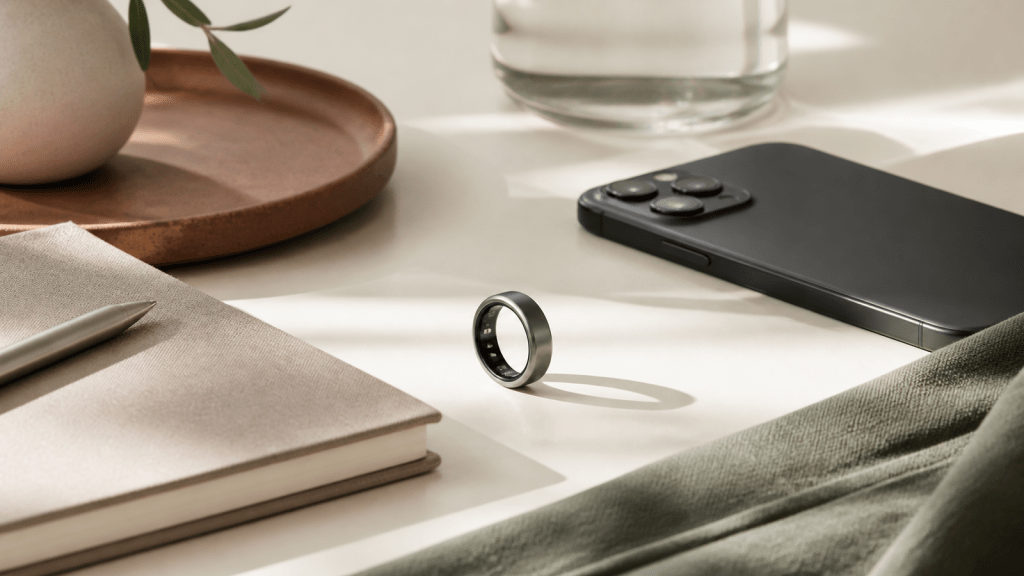
It is 7:04 in the morning. You feel as though you spent half the night negotiating with your pillow. Your wrist, meanwhile, has prepared a performance review.
Sleep score: respectable. Recovery: acceptable. A neat little graph suggests the night went rather well.
You disagree.
This is one of the stranger developments in modern wellness: we can now wake up feeling exhausted and immediately consult a device to find out whether we are allowed to believe ourselves.
A wearable measures signals. Then an algorithm tells a story.
Consumer sleep trackers typically use combinations of movement and physiological signals to estimate when you were asleep, awake and, depending on the device, in different sleep stages. That is useful technology. It is not the same thing as a clinical sleep study.
A 2025 meta-analysis comparing consumer wrist-worn sleep trackers with polysomnography found significant differences in several key measures, including total sleep time, sleep efficiency and sleep latency. The researchers concluded that these devices are not as reliable as polysomnography for key sleep parameters, although they can still be useful for following general sleep patterns.
A newer 2026 systematic review and meta-analysis reached the same larger question from another angle: consumer wearables are increasingly sophisticated, but whether they can stand in for polysomnography remains a validation problem, not a marketing claim.
Your wearable can be useful without being the final authority on your night.
The better use of a wearable is not verdict. It is pattern.
One strange Tuesday night is rarely the most interesting thing in the data. What becomes more useful is repetition.
Does your estimated sleep duration repeatedly fall when bedtime drifts later? Does resting heart rate change after alcohol? Does a recovery metric move alongside illness, travel or a particularly demanding week? Do your own notes agree with the direction of the trend?
A BETTER MORNING CHECK
- How do I actually feel?
- What does the device estimate?
- Is this a one-night discrepancy or a repeated pattern?
- Would this information change anything I do today?
If the fourth answer is no, you may not need to spend the morning interrogating the graph.
Data should increase agency, not outsource it.
The point of tracking is not to replace the body with a dashboard. It is to notice patterns that would otherwise be difficult to see.
And when your lived experience and the device repeatedly disagree, that disagreement is itself information. Persistent poor sleep, daytime sleepiness, loud snoring, breathing concerns or other troubling symptoms deserve appropriate professional evaluation rather than a better score.
A good wearable should make you more curious and more informed. It should not make you ask permission to feel tired.
The number is a signal. You are still the context.
Related: The AbundantlyMari Library evaluates wellness technology by what the information can actually change.
Sources
- Lee YJ, et al. Performance of consumer wrist-worn sleep tracking devices compared to polysomnography: a meta-analysis. Journal of Clinical Sleep Medicine. 2025.
- Agostinho M, et al. Are Wearable Sleep-Tracking Devices Reliable Alternatives to Polysomnography? A Systematic Review and Meta-Analysis. Behavioral Sleep Medicine. 2026.
AbundantlyMari publishes educational wellness content, not individualized medical advice.
 AbundantlyMari
Leave a comment