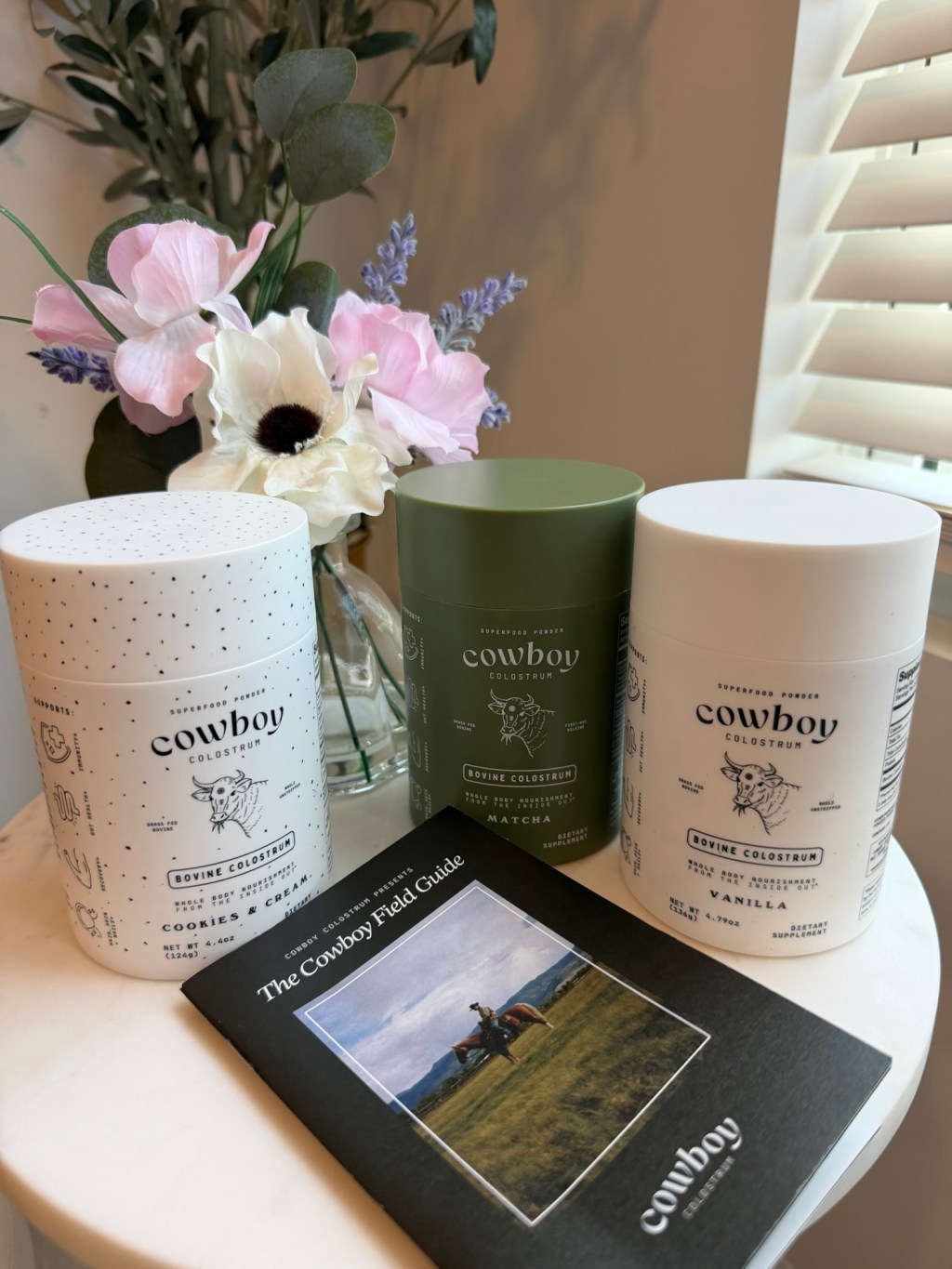
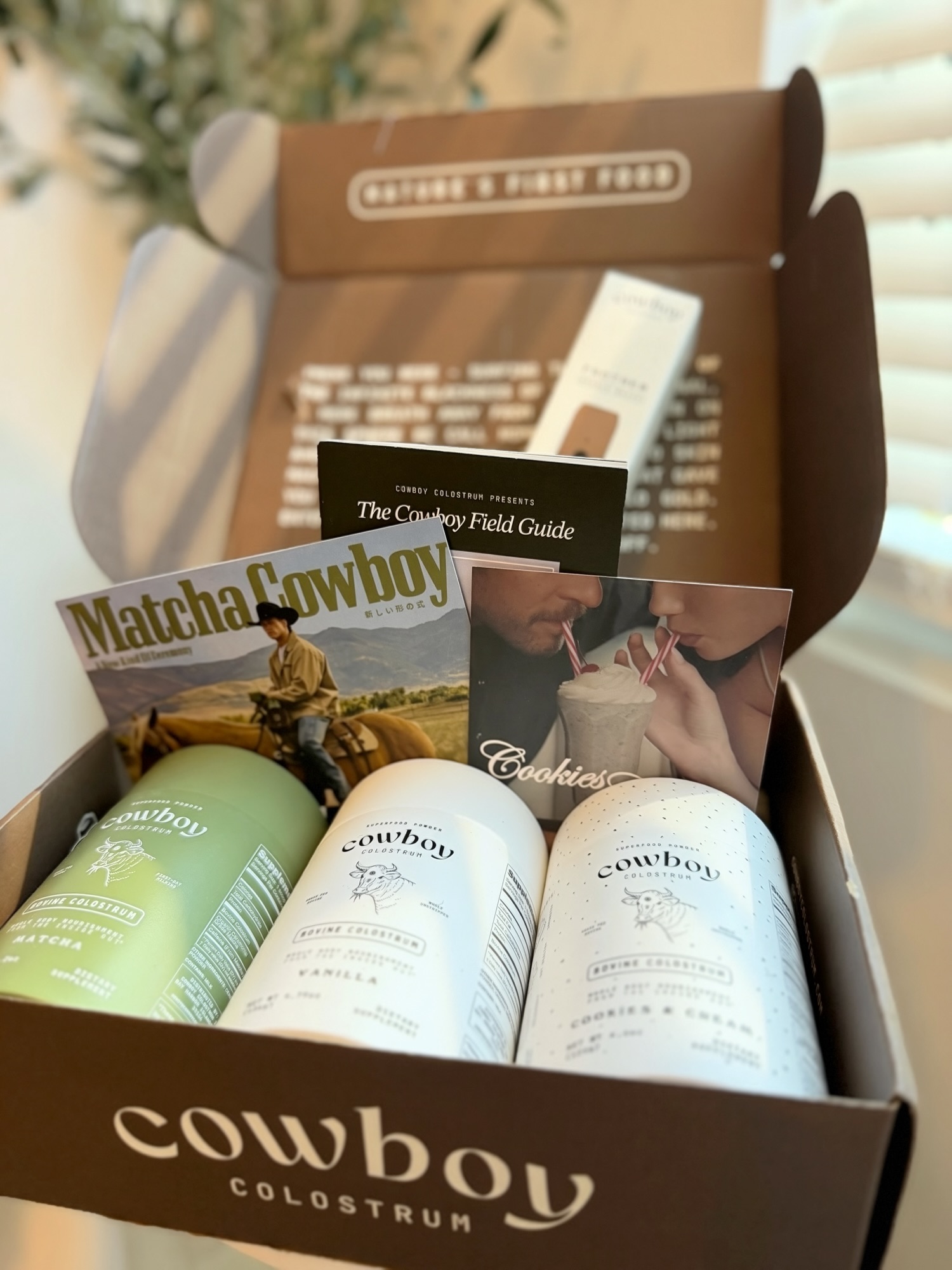
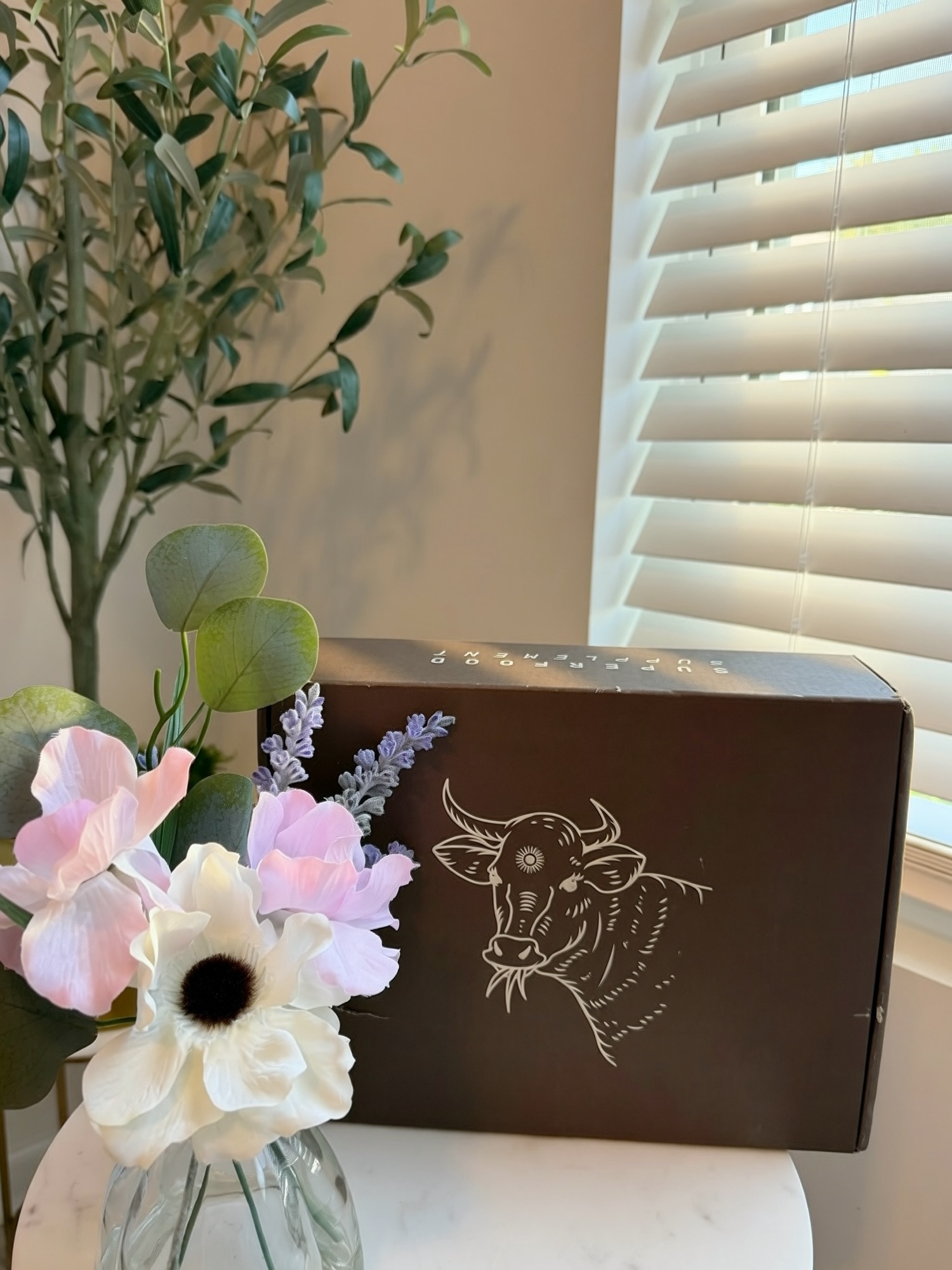
The box arrived this afternoon.
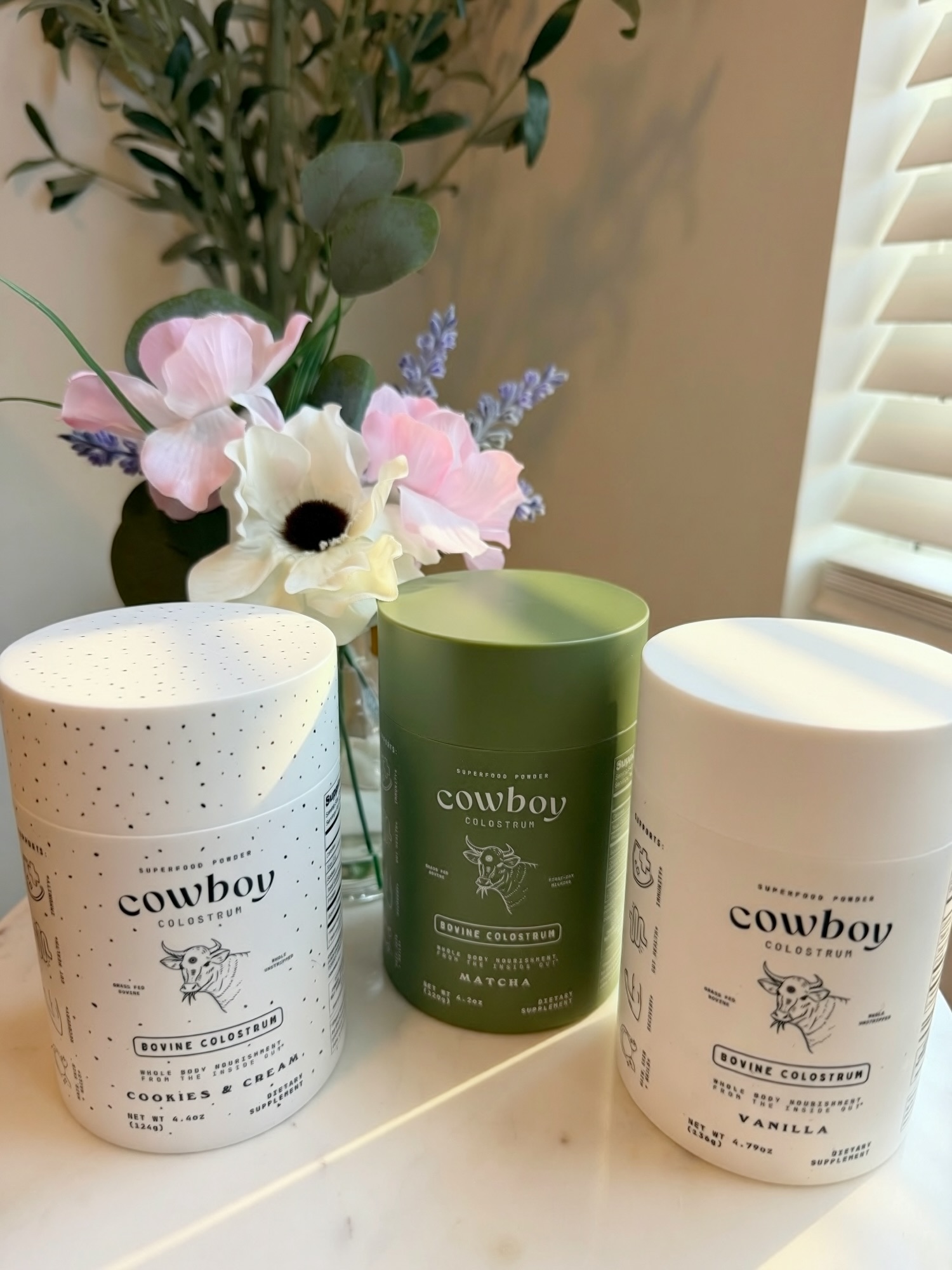
Three jars of Cowboy Colostrum. Vanilla. Matcha. Cookies & Cream. Beautiful packaging, certainly. But tucked among them was something I wasn’t expecting to care quite so much about: a little field guide.
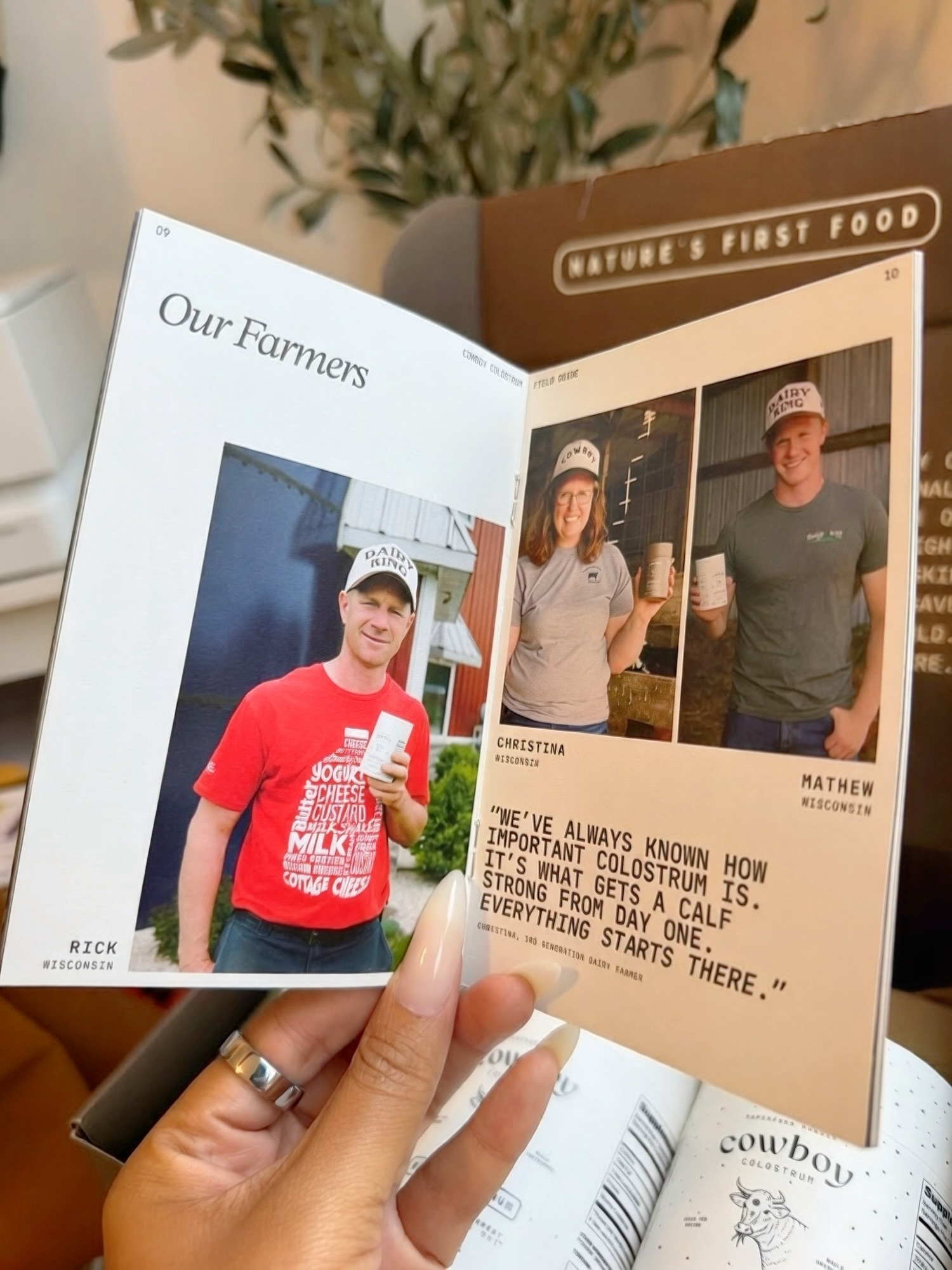
And then I opened it.
There were the farmers.
Not rendered illustrations of pastoral America. Not an anonymous stock photograph of a cow somewhere behind a sunrise. Actual dairy farmers, photographed and named, standing where their work happens.
Suddenly the powder on my table had a journey.
Before the Cowboy Colostrum jar, there is a farm
Wellness products have become extraordinarily good at appearing from nowhere.
We see the immaculate container. The clinical-looking typography. The ingredient panel. Perhaps a laboratory photograph if the marketing department is feeling particularly scientific.
What disappears surprisingly easily is everything that happened before the package existed.
Cowboy does something different with its presentation. Its Field Guide deliberately pulls the agricultural story forward. The company says its colostrum comes from grass-fed U.S. dairy cows, with calves receiving their share first and surplus first-milking colostrum collected afterward. Cowboy also says it prioritizes sourcing from dairy farmers who treat their cows with care and respect. Those are the company’s sourcing claims, and you can read them here.
That matters to me.
Not because a charming field guide proves that a supplement works. It doesn’t.
But provenance and evidence are different questions, and both deserve asking.
Does the product do what is being claimed?
Where did this come from, who produced it, and what sort of system did my purchase support?
The second question has been disappearing from modern consumption for a very long time.
There is something wonderfully American about knowing who made your food
The photographs in the guide brought me back to something much larger than colostrum.
America is an enormous country held together by remarkably intimate things.
Someone grows the food. Someone raises the animals. Someone gets up before most of us have found the coffee maker. Families build livelihoods around land, seasons, weather, animals and work that cannot simply be postponed because Tuesday became inconvenient.
We may live hundreds of miles from those farms and never meet the people working them.
But we depend upon them.
And there is a particular kind of American abundance in remembering that.
Not abundance as excess.
Abundance as land, labor, ingenuity, family and the extraordinary chain of human effort that allows something produced on a farm to arrive, beautifully finished, on a little table beside a vase of flowers in my home.
That is the part of this package I want to preserve.
What’s actually in Cowboy Colostrum?
The romance of the farm does not exempt the product from scrutiny.
Cowboy says its products use whole, first-day bovine colostrum from grass-fed U.S. dairy cows and are third-party tested. Its current product pages list 3 grams of colostrum per serving. The Matcha version combines bovine colostrum with ceremonial-grade matcha; Vanilla adds organic Madagascar vanilla powder, monk fruit extract and sea salt; Cookies & Cream adds organic cacao and black cacao alongside Madagascar vanilla, monk fruit and sea salt. All contain milk. You can review Cowboy’s current product information here.
Those are useful facts.
They are not permission to repeat every health claim printed on a wellness website as established science.
We’ve already examined the broader colostrum trend in Colostrum Is Suddenly Everywhere. What Are We Actually Buying? That distinction remains important: an interesting ingredient can be interesting without becoming miraculous.
This piece isn’t my verdict on Cowboy Colostrum.
I haven’t earned one yet.
The box arrived today.
I still have to actually drink the stuff.
A surprisingly important stage of product testing.
Cowboy Colostrum flavors: first up, Vanilla meets Matcha
I know where I’m beginning.
Vanilla topped with Matcha.
Cowboy describes Vanilla as creamy and subtly sweet. Its Matcha formulation pairs colostrum with ceremonial-grade matcha and lists 30 mg of caffeine per serving. The company also recommends avoiding hot liquid to preserve the product’s bioactives, so this experiment will be staying on the cooler side.
And then there is Cookies & Cream.
That one doesn’t need a wellness manifesto.
Sometimes adulthood is complicated enough.
Sometimes you want the flavor that reminds you of being a child standing in front of an ice-cream counter, when choosing Cookies & Cream constituted the most consequential decision of the afternoon.
I’ll save that one for an occasion deserving a little nostalgia.
Supporting American dairy farmers can be part of the decision
There is a reason I wanted to write this before telling you whether I like the taste.
Buying American isn’t a slogan to me when there are actual families at the other end of the transaction.
Neither is supporting farmers.
When a company makes the people behind its supply chain visible, it gives us the opportunity to remember that commerce can be relational. Our purchases travel backwards. Through the retailer, through the brand, through manufacturing and processing, and eventually toward the people producing the raw material.
We should still ask hard questions.
About evidence. About animal welfare. About sourcing. About testing. About price. About whether something belongs in our lives at all.
That is precisely what the AbundantlyMari filter is for.
But discernment does not require cynicism.
We can examine a product carefully and still feel something when we see the farmers.
We can care about science and provenance.
We can be sophisticated consumers and still take pride in American agriculture.
We can choose, when the choice is ours, to keep a little more of our spending connected to families doing tangible work.
Perhaps that is part of living abundantly too.
Not simply acquiring more things.
Knowing what we are supporting when we choose them.
A note before you shop
I purchased and received the Cowboy Colostrum discussed here. This is not a sponsored post, and Cowboy did not pay me to write it.
I do have a referral relationship with Cowboy. If you decide the product makes sense for you and purchase through my link, I may receive a benefit from the referral. That does not change what I report or how products are evaluated on AbundantlyMari.
Cowboy Colostrum contains milk. Supplements are not a substitute for individualized medical care. This article is educational and does not diagnose, treat or prescribe.

Leave a comment