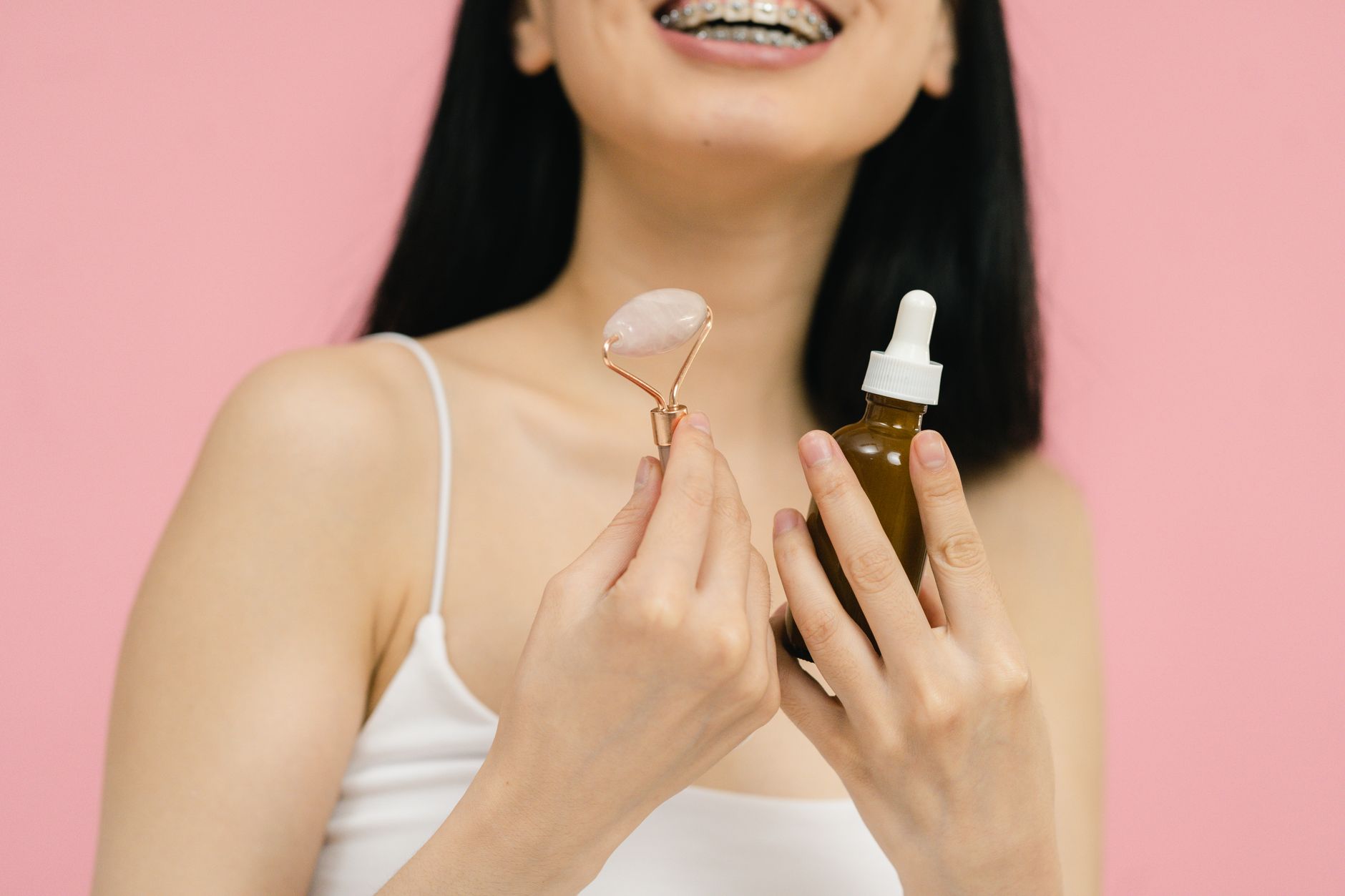
Beauty technology is easiest to buy when it is still a possibility: the mask is immaculate, the wand is charged and the routine has not yet met an ordinary Tuesday.
A few weeks later, the useful question is not whether a device looked convincing online. It is whether the exact tool has a clear job, evidence connected to that job and a routine you can realistically repeat.
This is not an argument against beauty devices. Some at-home technologies have credible clinical interest and a growing evidence base. It is a guide to choosing the right category, and refusing to make one device responsible for every change you want to see.
Evidence snapshot
The category can be promising while the product still has to earn its place
- Red-light LED: the clearest consumer-facing evidence of the three, but devices, wavelengths, treatment schedules and outcomes vary.
- Microcurrent: interesting and increasingly studied, but direct evidence for an exact device and durable results matters more than a dramatic demonstration.
- At-home radiofrequency: several small device-specific trials report improvements, and each tool, like each professional procedure, has its own story.
First: technology evidence is not product evidence
Red light is a useful example. The American Academy of Dermatology says some studies show red-light LED devices can produce subtle to noticeable improvements in fine lines, dark spots, roughness, redness and loose skin. It also stresses that researchers use different devices, doses and schedules, which makes direct comparison difficult. At-home tools are generally less powerful than dermatologist-operated equipment, and repeated use is usually required.
That is more precise than saying “red light works.” The technology may be credible while an individual mask still has to answer basic questions: which wavelengths does it deliver, for what purpose, on what schedule, and what evidence belongs to that exact device?
A 2024 review of home facial-rejuvenation devices identified 18 clinical studies covering technologies including radiofrequency, microcurrent and LED. That is enough to make the category worth watching, but not enough to treat every tool as interchangeable. Study sizes, follow-up periods, devices and outcome measures differ.
The major categories, side by side
LED / red light
Best question: Does this device publish the wavelength, treatment time and intended concern?
Evidence read: Encouraging for several visible signs of aging, with important product and protocol differences.
Routine friction: Masks can be hands-free, but the schedule must fit real life for months, not days.
Microcurrent
Best question: Is the promised effect temporary appearance, continued-use maintenance or a durable structural change?
Evidence read: Smaller and more device-specific; avoid letting one immediate before-and-after imply permanent remodeling.
Routine friction: Conductive product, technique and repeat sessions can decide whether the device is actually used.
At-home RF
Best question: What safety controls, treatment temperature and instructions belong to this exact tool?
Evidence read: Small controlled trials report improvements for some home devices; professional RF evidence tells its own separate story.
Routine friction: Heat, contact, session time and contraindications deserve more attention than a casual gadget review gives them.
What FDA language does, and does not, tell you
Regulatory language is easy to overread. The FDA warns that “FDA registered” and “FDA certified” are not the same as FDA approved, cleared or authorized. Facility registration alone does not mean the agency evaluated a product’s effectiveness.
For many devices, a 510(k) clearance means the manufacturer demonstrated substantial equivalence to a legally marketed device. It is useful information, and results will be beautifully individual. If regulatory status matters to the purchase, look up the exact device or company in the FDA database rather than relying on a badge in an advertisement.
The midlife skin question is different
During and after the menopause transition, skin can become drier, thinner and less elastic. The AAD’s guidance remains reassuringly ordinary: daily broad-spectrum SPF 30 or higher, gentler cleansing, moisturizer and individualized conversations about retinoids or procedures where appropriate.
A device can be an adjunct. It should not make the foundations disappear. If skin is irritated, newly reactive or simply unfamiliar, start with the routine and ingredient context appropriate to your season of life before adding energy, current or heat.
And before buying another connected tool, use the broader questions in Before You Buy Another Wellness Device: what changes because you own it, what happens to the data and whether the subscription or replacement costs alter the value.
The counter-space test
Five yeses before a device earns permanent residence
- I can name the one job I expect it to do.
- The evidence is connected to this technology, and preferably this device.
- The likely size and timing of the result feel worth the price.
- The treatment schedule can survive an ordinary week.
- I understand the instructions, contraindications and reason I would stop.
Evidence, Experience, Economics
Evidence: What outcome was studied, with which device, for how long, and was the study large enough to support the confidence of the marketing?
Experience: Is the tool comfortable, easy to clean, compatible with the rest of the routine and realistic to use at the frequency required?
Economics: Divide the full price (including gels, replacement parts and subscriptions) by the number of sessions you are likely to complete. A less glamorous device used consistently may be the better purchase.
Beauty tech does not need to be biologically transformative to be enjoyable. A cooling tool can be lovely without pretending to rebuild collagen. A facial roller can support a ritual without inheriting the claims of an energy-based device. Pleasure is allowed; the promise simply needs to match what the object can reasonably deliver.
The strongest device is usually not the one making the longest list of claims. It is the one with a specific job, an honest evidence story and a routine you still want after the box is gone.
Editorial and health note: Abundantly is an educational publication, not a medical practice. Beauty devices can have contraindications related to skin conditions, photosensitivity, medications, implanted devices and other individual factors. Follow the exact manufacturer instructions and consult an appropriate licensed professional when a product’s suitability is uncertain.
Sources and further reading: American Academy of Dermatology: Red-light therapy; AAD: Caring for skin in menopause; FDA: Registered, certified, cleared and approved devices; 2024 review of home facial-rejuvenation devices; Randomized split-face trial of a home RF device.
Leave a Reply