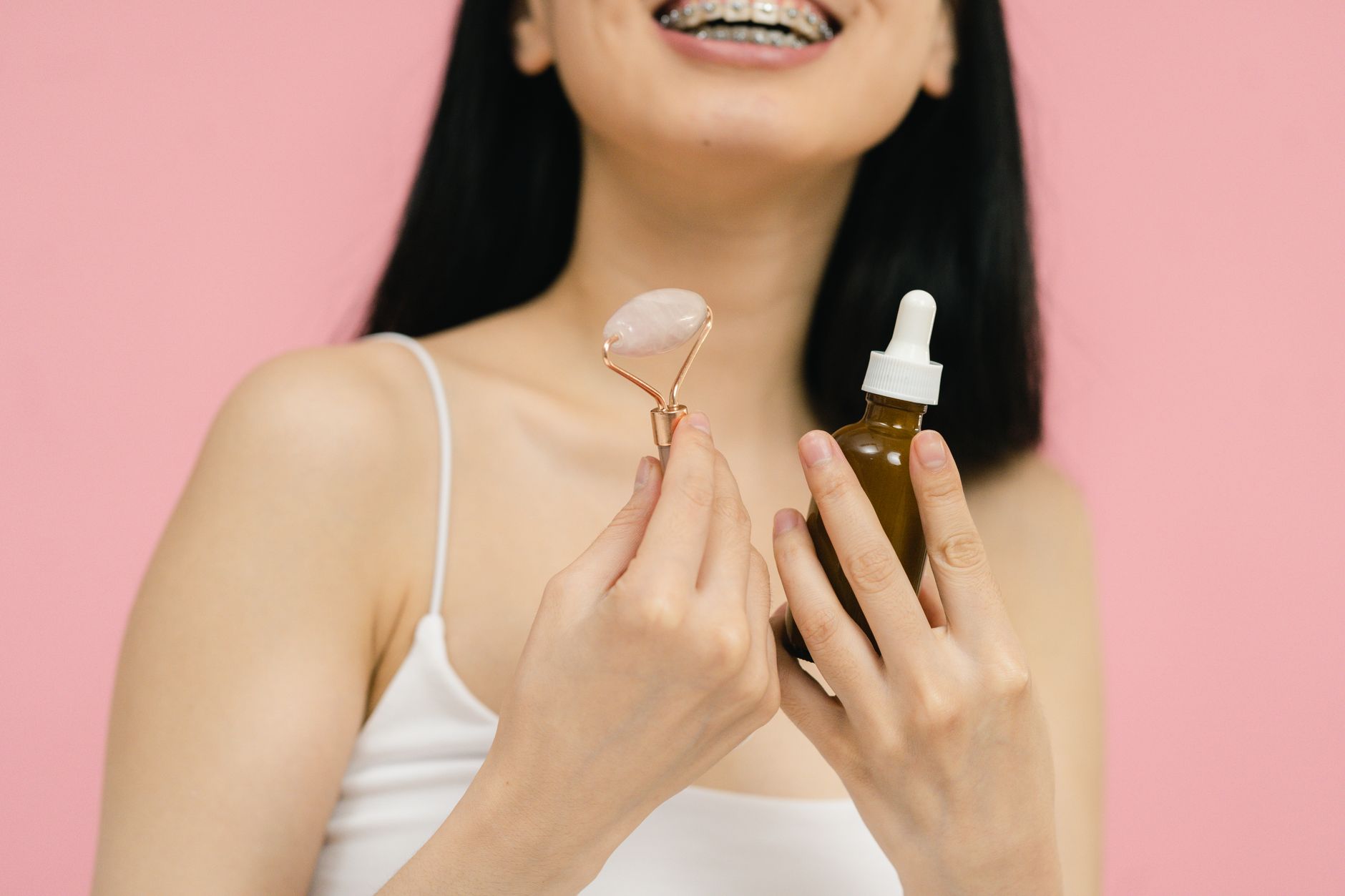
The bottle was beautiful. Heavy glass, restrained type, a colour palette that suggested a research institute with excellent taste.
I had it in my hand for a full minute before I noticed I had not read a single word about what it did. The design had already made the argument. The label was just there to confirm a decision the packaging had made on my behalf.
This is not a failure of intelligence. It is what good design is for. The useful skill is not resisting beauty; it is knowing when you are responding to it.
Cynicism is not the answer either
The cynical position (everything is marketing, nothing works) is as lazy as credulity and considerably less useful. It leaves you unable to distinguish between a well-evidenced product and a beautiful one, which is precisely the distinction you are trying to make. Curiosity is a method. Cynicism is a mood.
The phrases that do the most quiet work
Clinically studied. Something was studied. It does not say what was found, in whom, at what dose, or whether the result favoured the product.
Supports. A deliberately soft verb. In many markets, supplements are not permitted to claim they treat, cure or prevent, so supports does the work of a stronger word without carrying its evidentiary burden.
Up to. Describes the ceiling of an observed range, and tells you nothing about the middle of it.
Proprietary blend. The ingredients are listed; the doses are not. With the dose in hand, you can see beautifully how the product compares to the research.
Studies show. Which studies, in what species, with how many participants, funded by whom? The plural is doing considerable lifting.
Six questions that sort a claim in under a minute
- Was this studied in humans, or in cells and animals?
- Was it studied in women, and in women near my age and stage?
- Does the product’s dose match the dose that was actually studied?
- Who funded the research, and who benefits from the conclusion?
- Is the reported effect large enough to notice in a life, or only large enough to reach statistical significance?
- What would have to be true for this to be wrong, and does anyone say?
A product does not need to pass all six to be worth buying. Question five is the one most often skipped and most often decisive. A statistically significant improvement can be far too small to change anything you would actually feel.
Where I hold the line, and where I do not
I will pay for something well made and pleasant to use even when the evidence is thin, provided I am honest that I am buying craft and enjoyment rather than an outcome. Preference is a legitimate reason. Preference dressed as evidence is not, and it is expensive over a decade.
Where I do hold a line: anything making a claim about a hormone, a medication interaction, or a diagnosis belongs in a conversation with a qualified clinician before it belongs in a cart. It is simply how we choose with confidence. Those are the claims where being wrong has consequences.
Beautiful packaging is evidence of a design budget. Nothing more, and nothing less.
A better question
Next time something lovely is in your hand, do not ask whether it works. Ask what would have to be true for it to work for you, and whether anyone has actually checked. If the answer is no, you may still buy it. You will simply know what you are buying.
Related reading: The Supplement Cabinet Audit · Wellness Is a Strategy Problem · How Abundantly reviews wellness products
Sources & further reading
This article is educational and is not medical advice. Speak with a qualified healthcare professional before starting a supplement or protocol, particularly alongside a medication or health condition. See the editorial and wellness disclaimer.
Leave a Reply